

The Arabic-speaking world is one of the most digitally explosive markets on the planet right now. Over 400 million Arabic speakers are active across social platforms daily, generating hundreds of millions of posts, comments, shares, and reactions — in a language that most global listening tools were never built to understand. If your brand operates in the Middle East or North Africa and is not investing in Arabic social media monitoring, you are not just behind. You are strategically blind in one of the world’s most commercially valuable digital arenas.
This is not a niche concern for multinational corporations. It applies to regional brands managing their reputation, government entities measuring public sentiment, startups launching in the Gulf, and agencies managing campaigns across MENA markets. The question is no longer whether to monitor Arabic social media. The question is how to do it right — with the depth, nuance, and real-time capability the market demands.
The Arabic Digital Landscape: Numbers That Demand Attention
Before exploring the mistakes, you need to understand the scale of what is happening across Arabic-language social platforms every single day:
- Arabic is the fourth most-used language on the internet globally
- Saudi Arabia has one of the highest social media penetration rates in the world, with over 84% of the population actively using social platforms
- Egypt alone accounts for one of the largest Arabic social media user bases on the continent, with over 45 million active users
- The UAE, Kuwait, Qatar, and Bahrain all rank in the top tier globally for per-capita social media usage
- Arabic Twitter — now X — is widely recognized as one of the most politically engaged, commercially active, and culturally influential communities on the platform
- TikTok Arabic content has exploded in the past three years, with MENA users among the platform’s most prolific creators and consumers
- Snapchat maintains extraordinarily high daily active usage in Saudi Arabia and other Gulf markets, particularly among younger demographics
These numbers represent real people having real conversations about brands, products, policies, trends, and ideas — in Arabic. Every day you are not listening is a day you are operating without critical market intelligence.
7 Mistakes That Are Costing Your Brand in Arabic Social Media
Here is the core problem that most brands discover only after investing in the wrong tools: Arabic is not simply another language you can plug into a standard social listening platform and expect accurate results. The linguistic complexity of Arabic creates monitoring challenges that are genuinely unique — and the brands getting it wrong are paying a real commercial price.
The Language Problem
Mistake 1: Ignoring Dialectal Diversity Arabic is not one language in practical usage. It is a family of dialects that differ so significantly from one another that an Egyptian and a Moroccan may struggle to understand each other in informal conversation. Egyptian Arabic, Gulf Arabic, Levantine Arabic, Iraqi Arabic, and Maghrebi Arabic each have their own vocabulary, grammar patterns, and cultural expressions. A monitoring tool trained only on Modern Standard Arabic will miss the overwhelming majority of organic social conversation, which happens in dialect. If your tool does not understand dialect, it does not understand your audience.
Mistake 2: Missing Arabizi and Transliterated Content Millions of Arabic speakers — particularly younger users — write in Arabizi, a transliteration of Arabic using Latin characters and numbers. Phrases like “3ayez a3raf” or “msh 3arif” are everyday expressions invisible to tools that only process Arabic script. Standard platforms miss Arabizi almost entirely, creating a massive blind spot in brand monitoring that quietly distorts your data without triggering any obvious alert.
Mistake 3: Underestimating Code-Switching It is extremely common for Arabic social media users to switch between Arabic and English mid-sentence, mid-post, or even mid-word. A single tweet might open in Arabic, switch to English for a brand name or technical term, and close in dialect. This code-switching makes standard NLP models produce incomplete sentiment readings and missed mentions that corrupt your entire brand intelligence picture without you even realizing it.
The Strategy Problem
Mistake 4: Trusting Literal Sentiment Translation Sentiment analysis that works well in English fails regularly in Arabic because sarcasm, humor, and cultural references do not translate literally. What reads as a positive statement in a word-for-word translation may be deeply sarcastic in its cultural context. Arabic social media communities — particularly on X — are known for sharp, layered irony. Brands relying on generic sentiment tools are routinely receiving the wrong signal from some of their most important audience conversations.
Mistake 5: Monitoring Only One or Two Platforms The Arabic social media conversation does not live on a single platform. X carries intense political and commercial discourse. Instagram and TikTok drive culture, trends, and influencer commerce. Facebook remains dominant for community groups and older demographics. Snapchat is a primary channel for Gulf youth. YouTube hosts long-form opinion and review content with massive Arabic viewership. News portals and forums carry influential Arabic commentary. Monitoring only X and Instagram means you are reading two chapters of a ten-chapter book and calling it research.
The Execution Problem
Mistake 6: Reacting Instead of Anticipating Most brands using inadequate Arabic monitoring tools are permanently in reactive mode. They find out about a trending negative hashtag after it has already peaked. They discover a product complaint after it has been shared hundreds of times. And, they learn about a competitor’s campaign after it has already shaped audience perception. Genuine Arabic social media monitoring is not about finding out what happened. It is about knowing what is happening in real time and having the window to respond, adapt, and lead rather than chase.
Mistake 7: Separating Arabic Monitoring From Core Strategy The final and perhaps most damaging mistake is treating Arabic social media monitoring as a reporting function rather than a strategic input. Brands that relegate their Arabic listening data to a weekly PDF summary are wasting most of its value. The intelligence coming from Arabic social conversations should be informing content strategy, product decisions, campaign optimization, customer service protocols, and crisis communications in real time. When it does, the competitive advantage is significant and measurable.
What Serious Arabic Social Media Monitoring Actually Looks Like
Effective Arabic social media monitoring is a multi-layered capability that goes far beyond tracking mentions. Here is what a genuinely comprehensive approach covers:
- Real-time brand mention tracking across all platforms in every Arabic dialect, Arabizi, and mixed-language content
- Dialect-aware sentiment analysis calibrated to cultural and regional context
- Trend and hashtag monitoring that catches emerging narratives before they peak
- Competitor intelligence showing share of voice, sentiment comparison, and topic clusters across your competitive landscape
- Influencer and community mapping within your relevant Arabic-speaking digital ecosystem
- Crisis detection with immediate alerts when negative sentiment spikes around your brand
- Cross-platform coverage spanning X, Instagram, Facebook, TikTok, YouTube, Snapchat, news portals, blogs, and forums
- Custom reporting in both Arabic and English for multilingual organizations
The goal is not to collect data. It is to transform raw Arabic social conversation into structured, actionable intelligence that drives real business decisions.
AIM Insights: Built for the Arabic Digital Landscape
This is where AIM Insights, developed by AIM Technologies, stands entirely apart from generic global social listening platforms. AIM Insights was architected from the ground up specifically to handle the full linguistic, dialectal, and cultural complexity of Arabic digital conversation. It is not an English-first tool with Arabic added as a feature. It is a platform where Arabic is the foundation.
- Advanced Arabic NLP Engine AIM Insights runs on an NLP engine trained across multiple Arabic dialects — from Gulf and Egyptian to Levantine and Maghrebi — plus Arabizi and mixed-language content. It catches the conversations other tools miss entirely.
- Real-Time Sentiment Analysis With Cultural Calibration AIM Insights goes beyond positive, negative, or neutral. It scores sentiment with cultural context, catching regional expression patterns and layered sarcasm — so you get data you can actually trust.
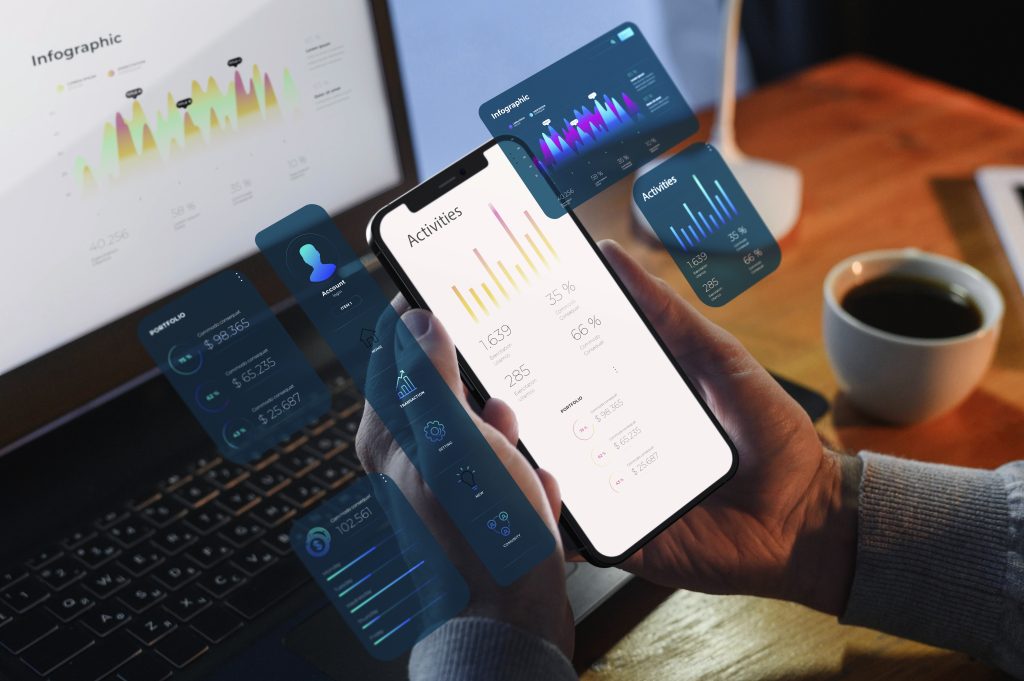
- Unified Cross-Platform Dashboard Every Arabic monitoring feed — X, Instagram, TikTok, YouTube, news sites — lands in one clean dashboard. No toggling, no manual stitching. Just a complete picture of your brand’s Arabic conversation.
- Instant Crisis Alerts When a negative hashtag gains momentum or a harmful narrative starts spreading, AIM Insights alerts your team immediately — giving you the response window that separates crisis management from crisis damage.
- Deep Competitor Analysis Track competitor mentions, sentiment, and share of voice in Arabic content alongside your own brand — in real time, not last week’s report.
- Influencer Discovery and Tracking AIM Insights maps the Arabic influencer landscape in your category, tracking content, engagement, and audience sentiment over time — so your partnerships are built on data, not follower counts.
- Custom Reporting in Arabic and English Generate fully customizable reports in both languages for every stakeholder — marketing, PR, C-suite — without any manual reformatting.
Who Needs AIM Insights Right Now
The answer is broader than most brands initially assume:
- Consumer goods brands launching or expanding in Saudi Arabia, Egypt, or the UAE need to track campaign reception and product sentiment in real time across Arabic platforms
- Financial services firms operating in MENA need to monitor public trust signals and competitor positioning in Arabic-language conversations
- Government and public sector entities need to measure citizen sentiment and identify emerging concerns before they become public issues
- Healthcare organizations need to track Arabic conversations around health topics and identify misinformation spreading through Arabic social communities
- Hospitality and tourism brands serving Gulf travelers need Arabic social listening to manage reputation and identify advocacy opportunities
- Media and entertainment companies need to track Arabic audience sentiment around content and talent in one of the world’s most engaged media-consuming regions
From Arabic Social Data to Real Business Decisions
The ultimate value of Arabic social media monitoring is not the data itself. It is what you do with it. Brands that integrate AIM Insights into their decision-making workflows consistently achieve faster crisis response, higher campaign ROI through real-time Arabic-language performance feedback, stronger content relevance grounded in what Arabic audiences are actually discussing, better customer experience through early detection of complaints in Arabic-language channels, and sharper competitive positioning informed by genuine intelligence on how rivals are perceived in Arabic markets.
The Competitive Reality You Cannot Ignore
Your competitors in the MENA market are increasingly sophisticated. The brands winning in Arabic-language markets are not winning by accident. They are investing in tools built specifically for the Arabic digital environment, listening continuously, responding rapidly, and refining their strategies based on real data from real conversations happening right now.
Every day you operate without genuine Arabic social media monitoring capability is a day your competitors who do have that capability are getting smarter, faster, and more attuned to the market you share. The Arabic conversation is happening whether you are listening or not. The only question is whether you are in the room.
If you are serious about understanding and winning in Arabic-speaking markets, the time to act is now. AIM Technologies has built AIM Insights to give brands exactly the Arabic social media monitoring capability this market demands — real-time, dialect-aware, cross-platform, and built for action rather than reporting.
Request your free demo from AIM Technologies today and see firsthand how AIM Insights transforms Arabic social media conversation into clear, actionable intelligence that drives real business results across the MENA region. Stop guessing what your Arabic-speaking audiences think. Start knowing.